Gallery 1 and The Engine Room, SAM at Tanjong Pagar Distripark
Free admission for all from 5–11 Oct
Hiroshi Sugimoto: Form Is Emptiness
Hiroshi Sugimoto: Form Is Emptiness marks the internationally acclaimed artist’s first major survey exhibition in Southeast Asia. Bringing together 63 works from 11 series, alongside 14 fossils from the artist’s personal collection, the exhibition traces five decades of artistic inquiry and sustained conceptual exploration.
The exhibition title draws from a well-known line in the Heart Sutra, a foundational Buddhist text. The phrase “form is emptiness” articulates a profound yet direct insight: nothing exists independently, and we perceive the world in a certain way because of the definitions we have created for ourselves. The tension between appearance and reality has long been central to Sugimoto’s practice.
Although Sugimoto is best known for his photography, his work extends far beyond a single medium, encompassing sculpture, installation, writing, and architectural design. For him, these are not departures from photography but expansions of photographic thinking—ways of distilling and contemplating time and space so that a moment becomes a catalyst for deeper perception.
At the intersection of Buddhist philosophy and scientific inquiry, Sugimoto approaches time not as a fixed measure, but as something open and malleable. He invites viewers to slow down and reconsider the act of seeing itself, which is not passive reception, but an intentional and reflective gesture.
Designed by Sugimoto, the exhibition layout takes the form of a mandala—a circular, geometric figure representing the universe in Hindu and Buddhist symbolism. Rather than a single linear route, paths branch, loop and reconnect, inviting more than one direction of movement.
Visitors are invited to move through the exhibition at their own pace and in their own sequence. In doing so, the spatial experience echoes Sugimoto’s enduring concern: how form and emptiness exist in interdependence, and how understanding gradually emerges through experience rather than relying on predetermined interpretation.
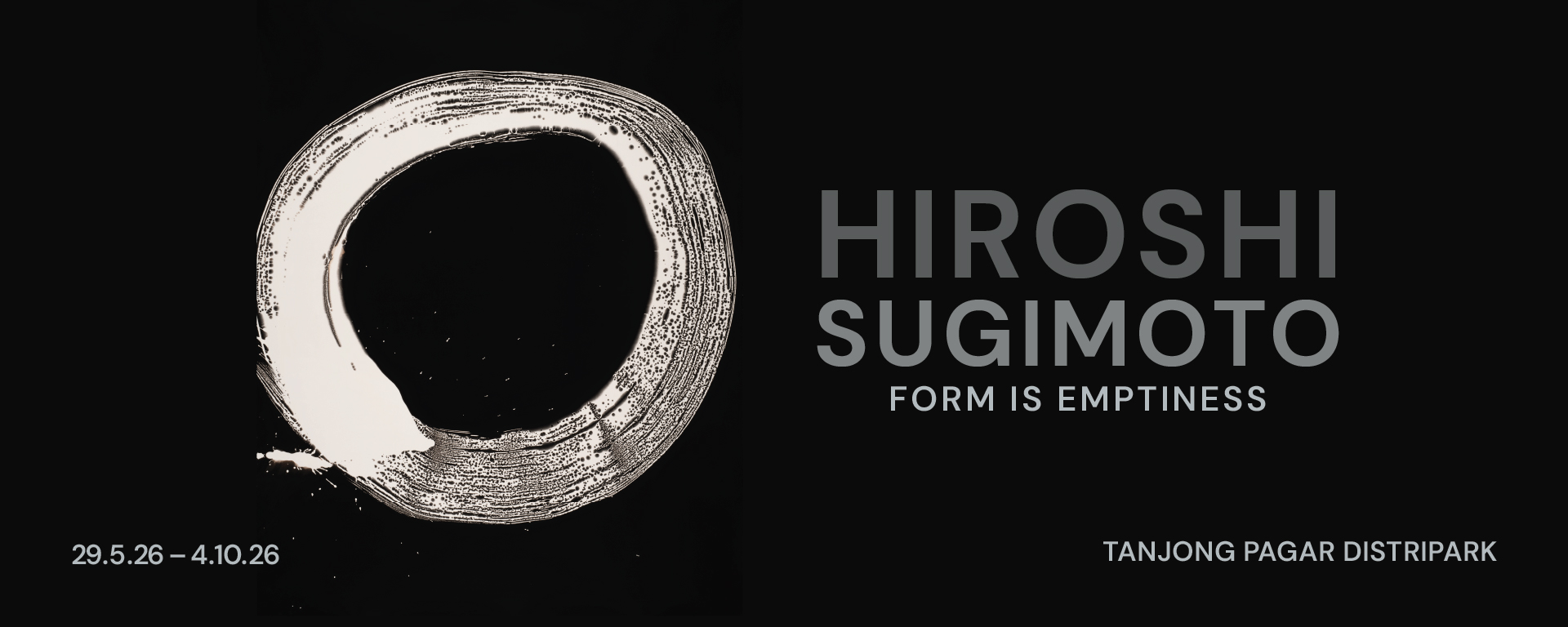
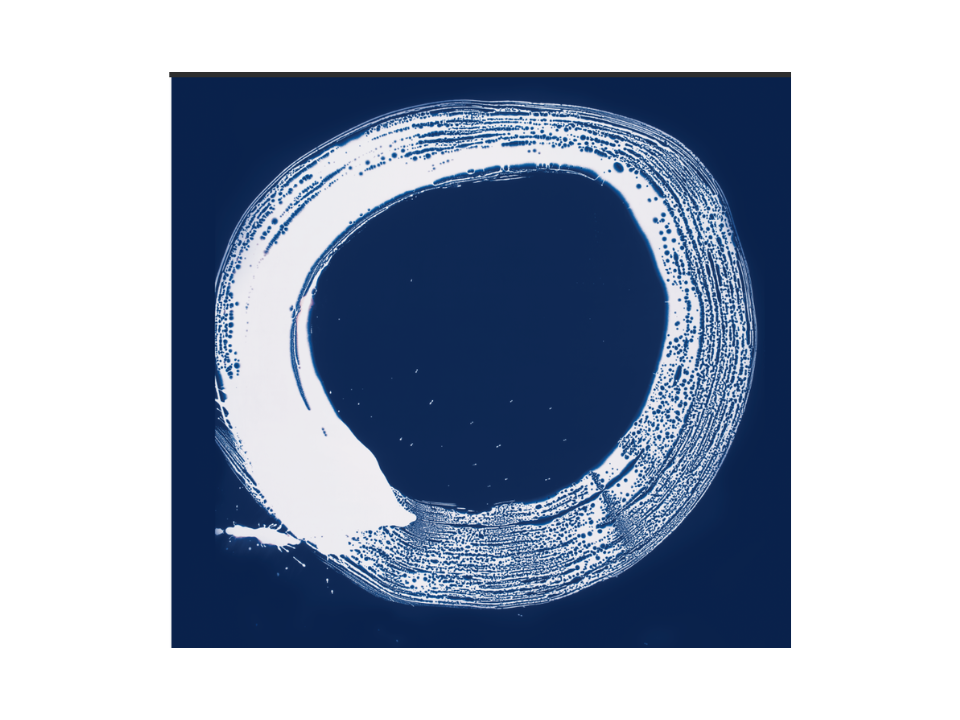
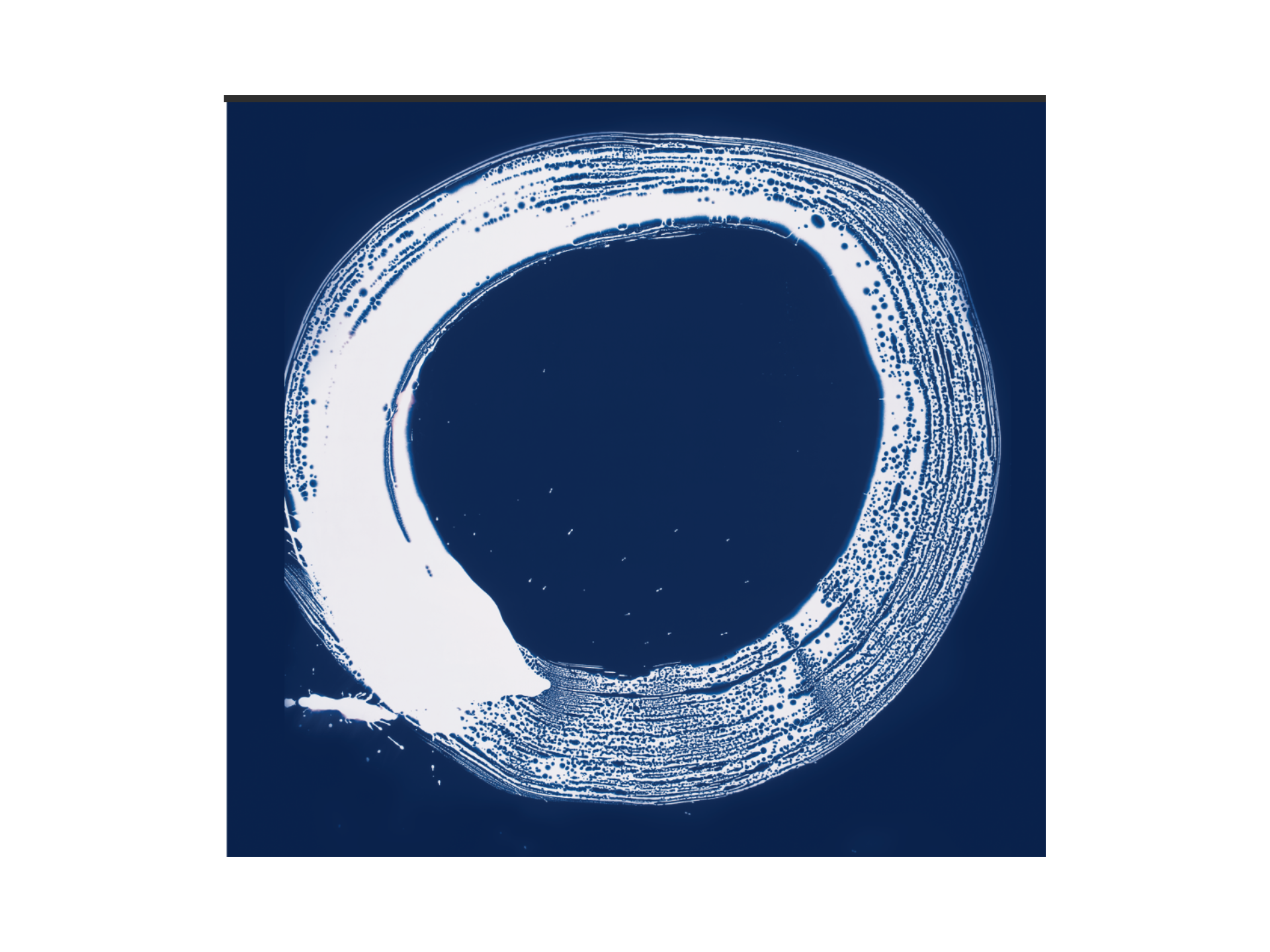
Hiroshi Sugimoto, Brush Impression, 1547, 2024, gelatine silver print, 93.6 x 75 cm. Image courtesy of the artist
about the artist
Hiroshi Sugimoto was born in Tokyo, Japan, in 1948. He graduated from Rikkyo University, Tokyo, in 1970 and from the Art Center, Los Angeles, in 1974. He currently splits his time between Tokyo and New York.
A multidisciplinary artist, Sugimoto’s practice encompasses photography, sculpture, installation, architecture, garden design, writing, calligraphy, culinary arts, and directing/producing performing arts. His practice bridges Eastern and Western ideologies while examining the nature of time, perception, and the origins of consciousness.
In 2008, Sugimoto founded the New Material Research Laboratory, an architectural design office that incorporates new uses for traditional materials and techniques. A year later, he established the Odawara Art Foundation, a charitable nonprofit organization to promote traditional Japanese culture and performing arts. In 2017, Odawara Foundation opened Enoura Observatory, a land art complex set between the foothills of Hakone Mountain and Sagami Bay.
artwork highlights
related events
check out the line-up of free and ticketed events below!
AUDIO GUIDE
See the Silence. Hear the Light: An Accompanied Audio Walk
VIRTUAL GUIDE You Never Walk Alone | Namjooning at Hiroshi Sugimoto: Form Is Emptiness
Inspired by RM from BTS and Namjooning, the practice of finding meaning, connection, and inspiration through time spent with world around you, this virtual trail invites you to explore Hiroshi Sugimoto: Form Is Emptiness at your own pace.
Showcasing over sixty works across five decades of artistic practice, this exhibition marks the internationally acclaimed artist’s first major survey exhibition in Southeast Asia. Although Sugimoto is best known for his photography, his work extends far beyond a single medium, encompassing sculpture, installation, writing, and architectural design. For him, these are not departures from photography but expansions of photographic thinking - ways of distilling and contemplating time and space so that a moment becomes a catalyst for deeper perception.
As you journey through the artworks, let music accompany your path as you encounter Sugimoto’s works as spaces for your own thoughts, feelings, and discoveries to unfold. Look beyond what separates us and consider the shared experiences that connect us instead. Pause, observe closely, and find meaning in the act of looking and listening. Although we each see and experience the world in our own way, we are a part of something larger, and you never walk alone.
Join us on a guided tour and gain insights on artworks presented in Hiroshi Sugimoto: Form Is Emptiness.
Family Tour: Seeing & Believing
Explore the works of artist Hiroshi Sugimoto through this interactive family-friendly tour.
Meeting Point: Level 1, Gallery 1
Free, by registration (Exhibition admission is included)
• Sat, 12 Sep | 2.30pm - 3.15pm | Register here
• Sun, 4 Oct | 2pm - 2.45pm | Register here
Curator Tour: Sun, 4 Oct | 3pm - 4pm
Meeting point: Level 1, Gallery 1
Free, by registration (Admission fees to the exhibition apply)
Docent Tour: Every Thursday to Sunday | Various timings
Meeting point: Level 1, Gallery 1
Tours are available during museum hours and may vary daily based on the docent on duty. For information on the day’s tour route or to join a tour, please approach the ticketing counter. For latest schedule and details, click here.
DROP IN ACTIVITY
[Listening Station] Between Orbits and Sleep by Hiroshi Ebina
Immerse yourself in a sonic layer commissioned to serve as the atmospheric pulse for Spacescape. This curated electronic accompaniment is designed as a sensory bridge to the imagery of Hiroshi Sugimoto, drawing specifically from sound artist Hiroshi Ebina’s evocative album, Into the Darkness of the Night.
Date: 29 May – 4 Oct
Time: 10AM - 7PM (Daily during opening hours)
Venue: Level 1, The Engine Room
[Self-guided Resource] Hiroshi Sugimoto: Form Is Emptiness Mini Guide
Designed for discovery and wonder, this self-guided resource is available onsite and recommended for young visitors ages 7 and up.
Date: June - 4 Oct
Time: 10AM - 7PM (Daily during opening hours)
Venue: Level 1
[SAM&Schools] Bartley Secondary School Artwork Response to Hiroshi Sugimoto: Form Is Emptiness
Featuring a series of photographs taken by 15-year-old students across a series of classes, discover how they interpreted and experimented with black-and-white photography inspired by the Hiroshi Sugimoto’s artworks!
Date: June - 4 Oct
Time: 10AM - 7PM (Daily during opening hours)
Venue: Level 1
WORKSHOP
[Workshop] Fujifilm Black & White Digital Photography Workshop
Sun, 11 Oct, 10am - 12pm | Register here
Venue: The Main Deck (located in #03-07), SAM at Tanjong Pagar Distripark
$20 per pax (Exhibition admission is included) | Ages 13 and up
SAM has partnered with FUJIFILM Asia Pacific to bring you an exclusive black and white digital photography workshop! Inspired by Hiroshi Sugimoto: Form Is Emptiness, join us to discover the art of black and white photography, and observe how everyday scenes can be transformed into art through the lens of a camera.
Led by Fujifilm’s X-photographer Derrick Ong, in this workshop you will:
- Discover Hiroshi Sugimoto's photography approach and techniques
- Learn about Fujifilm ACROS Film simulation with colour filters
- Explore light and shadow for creative aesthetic framing and composition
- Experiment with the ACROS filter through hands-on photography exercises
This programme is presented in conjunction with the exhibition, Hiroshi Sugimoto: Form Is Emptiness in collaboration with Fujifilm.
•Full-Time National Servicemen (NSFs) excluding foreign personnel
•Overseas student/teacher
SGD 10
SGD 15
• Children 6 years and below
• Local/locally-based students/teachers
• Person with disabilities (PWD) and their caregiver2
Free.
Not required to purchase a ticket.
Please present valid proof of identity (e.g. NRIC, Student Pass) at SAM's ticketing counter to enjoy free admission.
SAM30 Discovery Package
SGD 30
Enjoy over $45 in value for just $30, including two exhibition tickets, a $15 SIP at SAM voucher, and 10% off SAM merchandise and publications. Redeem your package at SAM between 26 July and 30 Sep 2026.
All ticket prices are inclusive of booking fees 1Valid proof of identity (e.g., passport, school pass) must be presented at the ticketing counter to enjoy concession admission. 2One caregiver accompanying visitors with disabilities will enjoy free admission, regardless of the caregiver's nationality.
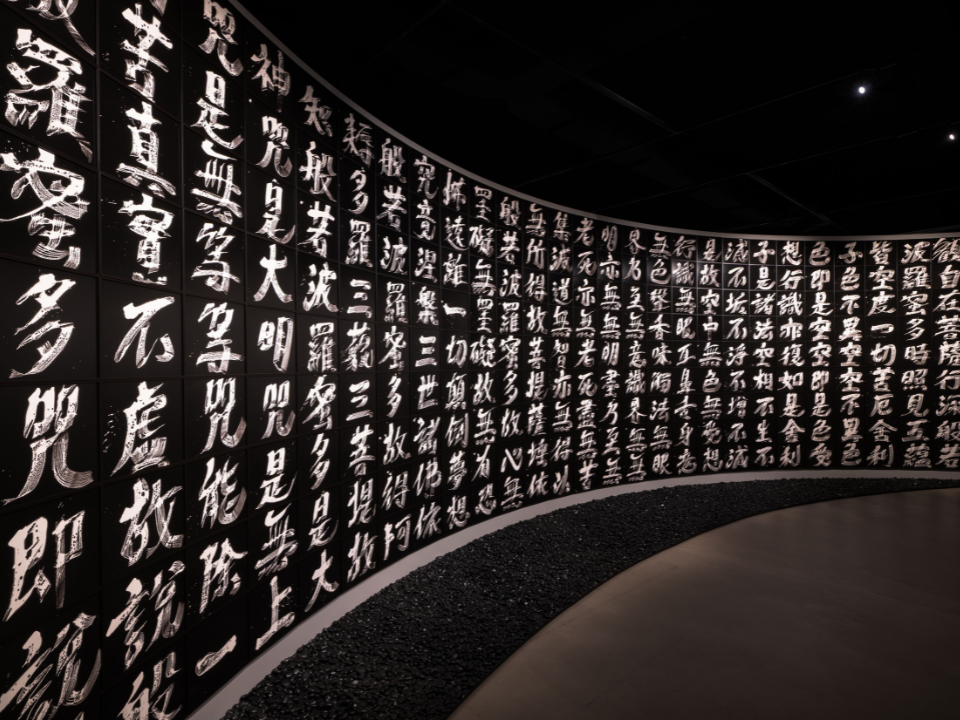
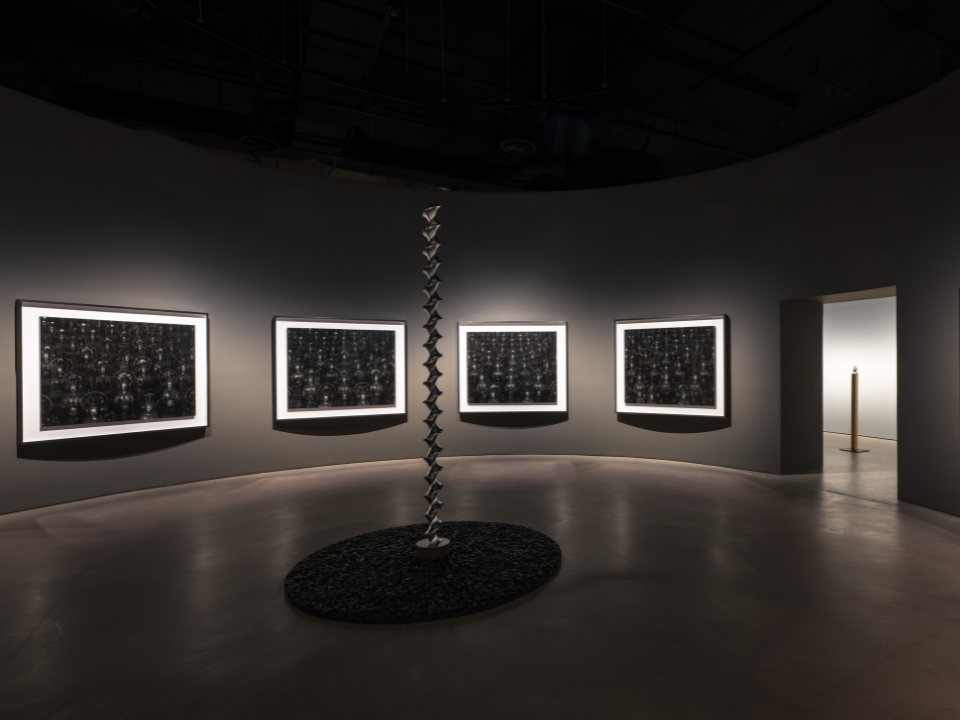
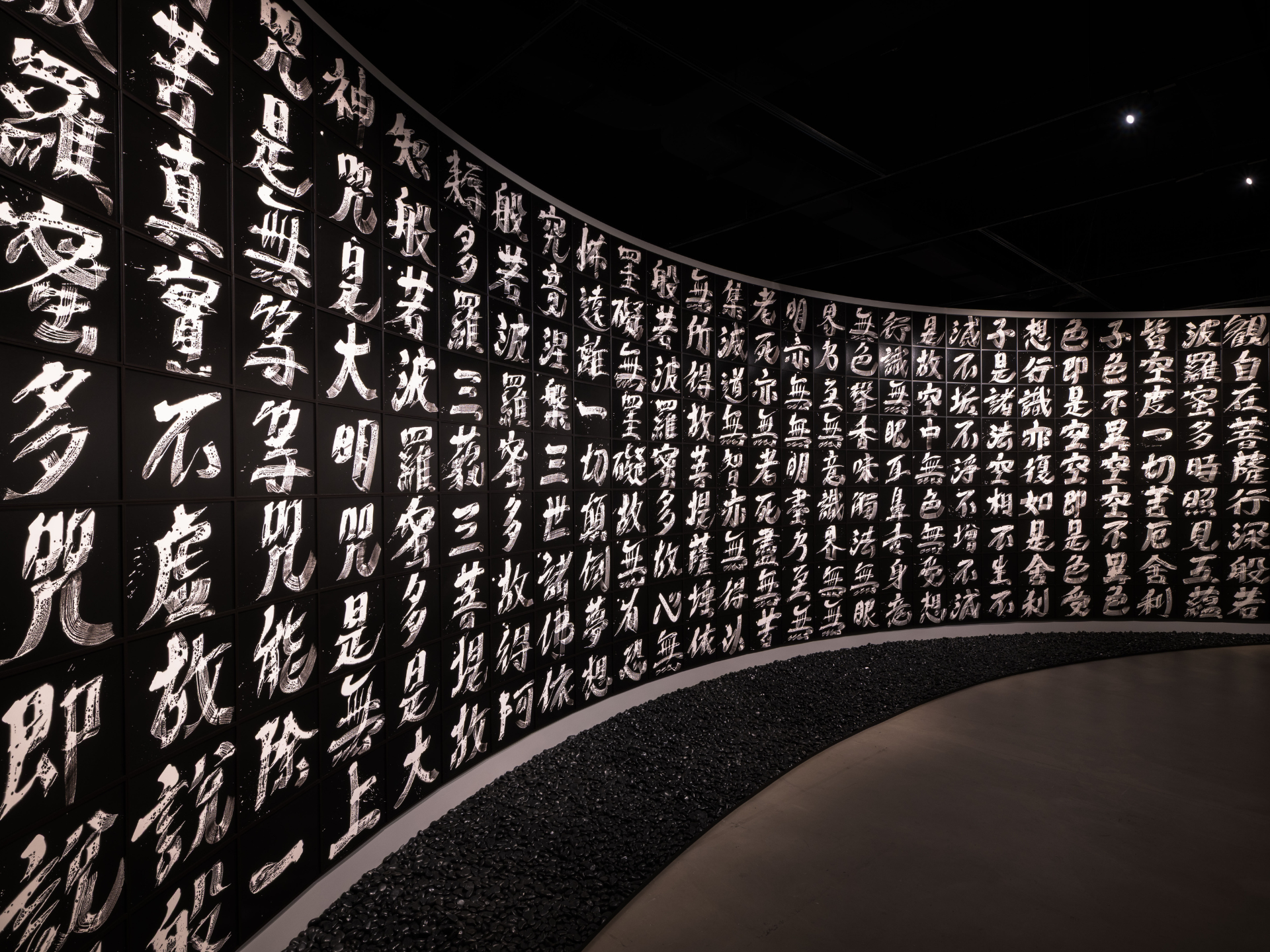
Image size: 49.5 x 59.7 cm (each); Frame size: 50.165 x 60.325 x 3.8 cm (each); 288 Unique gelatine silver prints;
Brush Impression, Heart Sutra is a monumental convergence of photography, calligraphy, and spiritual reflection. Comprising 288 unique gelatine silver prints, the work transforms the Heart Sutra’s 274 Chinese characters into an architectural and bodily encounter.
Embracing impermanence, Sugimoto intentionally employs expired photographic paper. In his darkroom, he undertakes a meditative ritual: with a brush dipped in fixer, he writes the sutra in the dark, guided only by rhythm and memory.
With a burst of light, the invisible script then becomes an image emerging through chemical revelation. This ceremonious process enacts and makes manifest the Sutra’s central insight, inviting viewers into a space where matter, time, and void coexist and dissolve.
Installation view of Hiroshi Sugimoto, Brush Impression, Heart Sutra (2023), 288 unique gelatine silver prints, 49.5 x 59.7 cm each, as part of ‘Hiroshi Sugimoto: Form Is Emptiness’. Image courtesy of Singapore Art Museum.
Hiroshi SugimotoSeries: Theaters
1976–2014
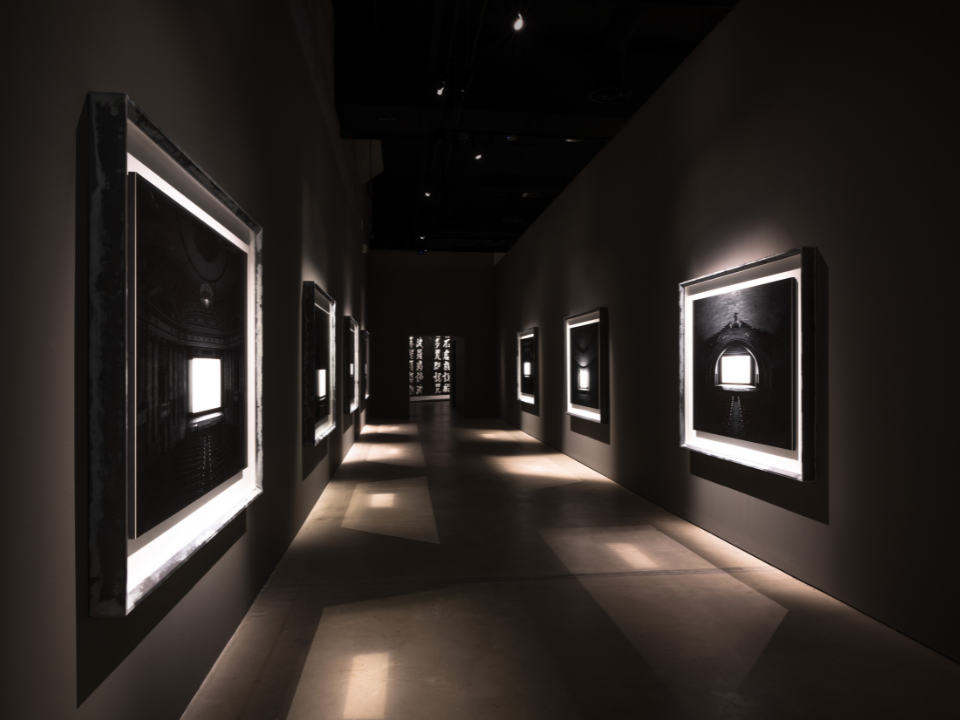
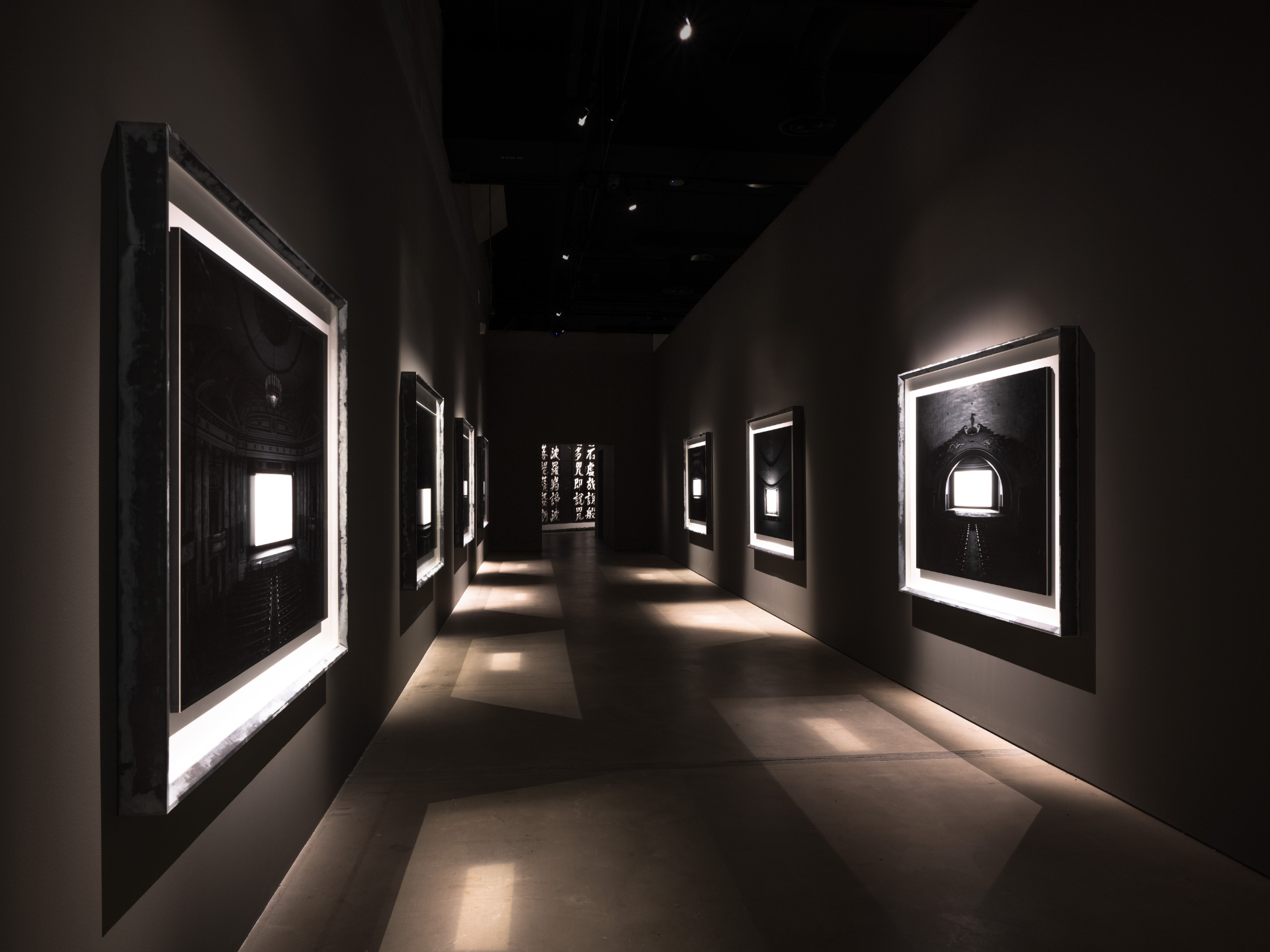
Image size: 119.4 x 149.2 cm; Frame size: 155.3 x 185.1 x 10.1 cm; Gelatine silver print;
Spanning more than four decades, Sugimoto’s celebrated Theaters series features empty cinemas illuminated solely by their glowing screens. By keeping the shutter open for the full duration of a film—about two hours—he compresses hundreds of thousands of projected frames into a single luminous rectangle.
Early works were made at operating cinemas such as St. Mark’s Cinema in New York, USA. He later expanded his repertoire to include Abandoned Theaters and Opera Houses where he could choose the films that were being projected. Each photograph collapses a film’s “lifespan” into a single image, reflecting his recurring comparison between cinema and life—it begins, unfolds, and ends in disappearance.
Installation view of Hiroshi Sugimoto, Theaters (1976 – 2014), as part of ‘Hiroshi Sugimoto: Form Is Emptiness’. Image courtesy of Singapore Art Museum.
Hiroshi SugimotoSeries: Opticks
Collection of the Artist
2018–ongoing
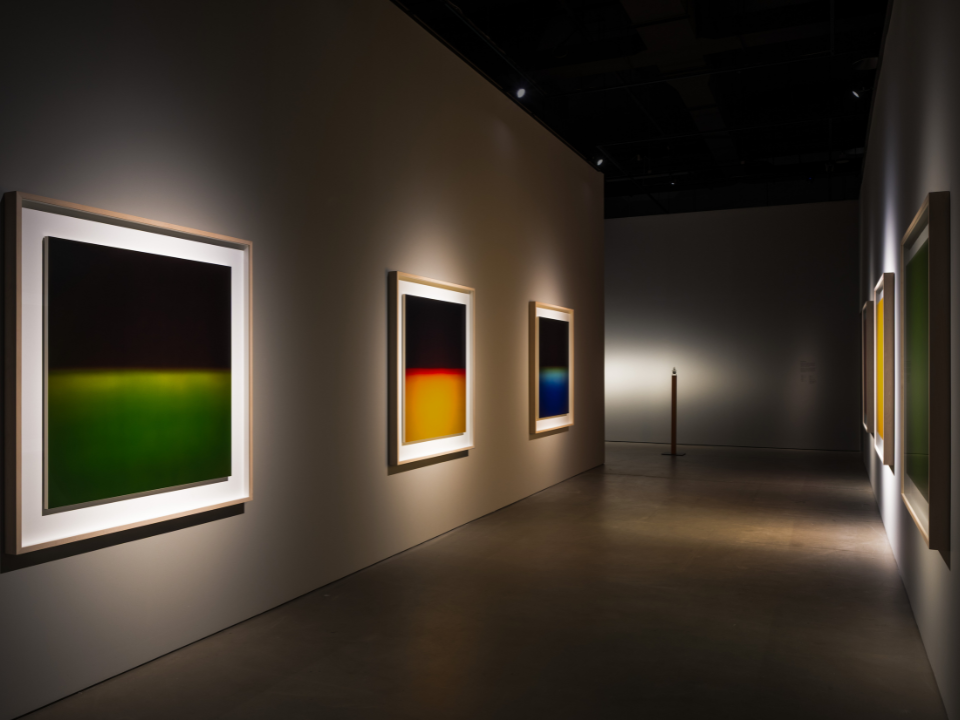
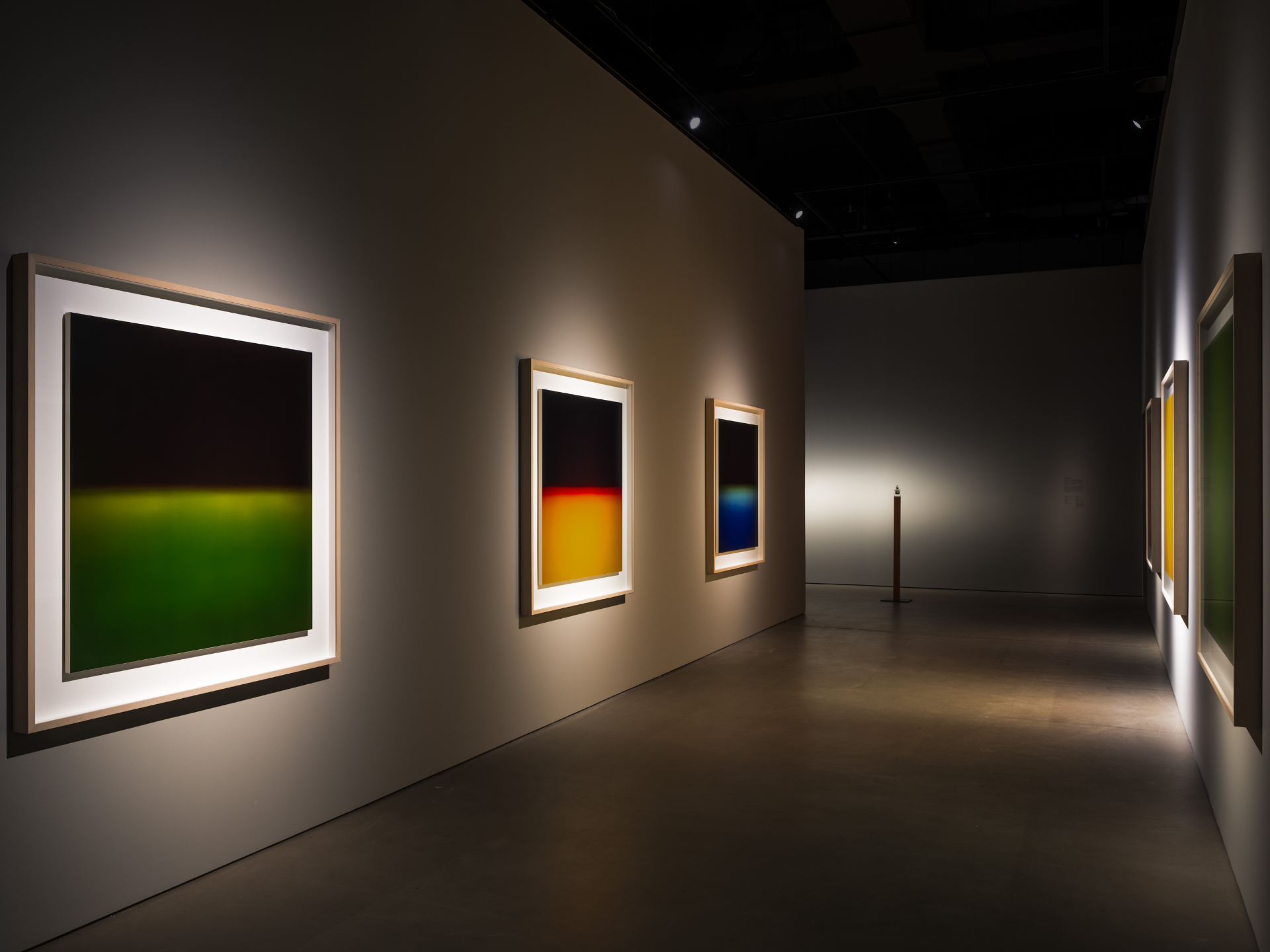
Image size: 119.4 x 119.4 cm; Frame size: 152.4 x 152.4 x 7.6 cm; Chromogenic print;
Rooted in the study of light, Opticks takes its name from Isaac Newton’s 1704 treatise, which demonstrated that all colours exist within white light, but are only perceivable when absorbed, reflected or transmitted by external objects. In this series, Sugimoto focuses on light itself, turning photography away from objects and toward the source of perception.
Revisiting Newton’s experiments, Sugimoto placed a prism in his studio and focused not on the familiar seven-colour spectrum but on the subtle “intracolours” within it. Using a mirror he designed, he further divided each band of colour into countless gradations. Originally photographed on Polaroid film, then digitised and enlarged, each photograph immerses us in fields of colour that seem to dissolve form, inviting us to encounter light itself.
Installation view of Hiroshi Sugimoto, Opticks (2018 – ongoing), as part of ‘Hiroshi Sugimoto: Form Is Emptiness’. Image courtesy of Singapore Art Museum.
Hiroshi SugimotoSeries: Sea of Buddha
Collection of the Artist
1995
Image size: 119.4 x 149.2 cm; Frame size: 152.4 x 182.2 x 7.6 cm; Gelatine silver print;
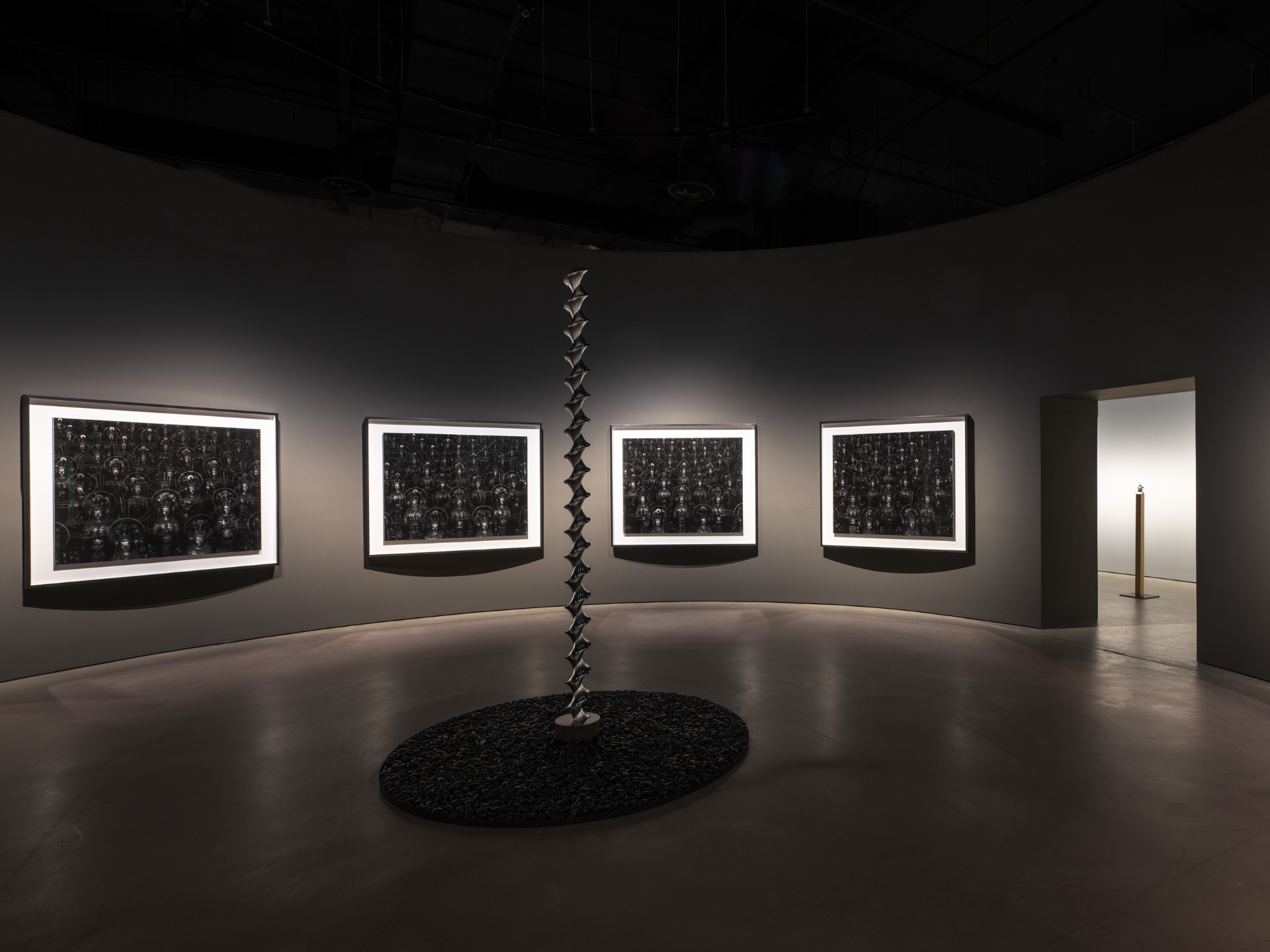
Sea of Buddha captures the 1,001 gold-leaf statues of Guanyin, the Buddhist bodhisattva of compassion. The statues are enshrined at the Rengeō-in temple in Kyoto, rebuilt in the 13th century. They stand within the temple’s Kannondō hall—better known as Sanjūsangendō, the Hall of Thirty-Three Bays. After seven years of negotiation, Sugimoto was finally granted permission to photograph them. Working at dawn using only natural light and removing modern additions from the temple, he recreates a vision of how they might have looked when they were first installed 800 years ago.
Arranged in dense rows, the statues extend beyond the limits of the frame and appear to recede to infinity. Each photograph repeats frame by frame like prayer beads turning in a ceaseless loop, inviting sustained, meditative looking.
Installation view of Hiroshi Sugimoto, Sea of Buddha (1995), as part of ‘Hiroshi Sugimoto: Form Is Emptiness’. Image courtesy of Singapore Art Museum.
Hiroshi SugimotoSpacescape
Collection of the Artist
2024
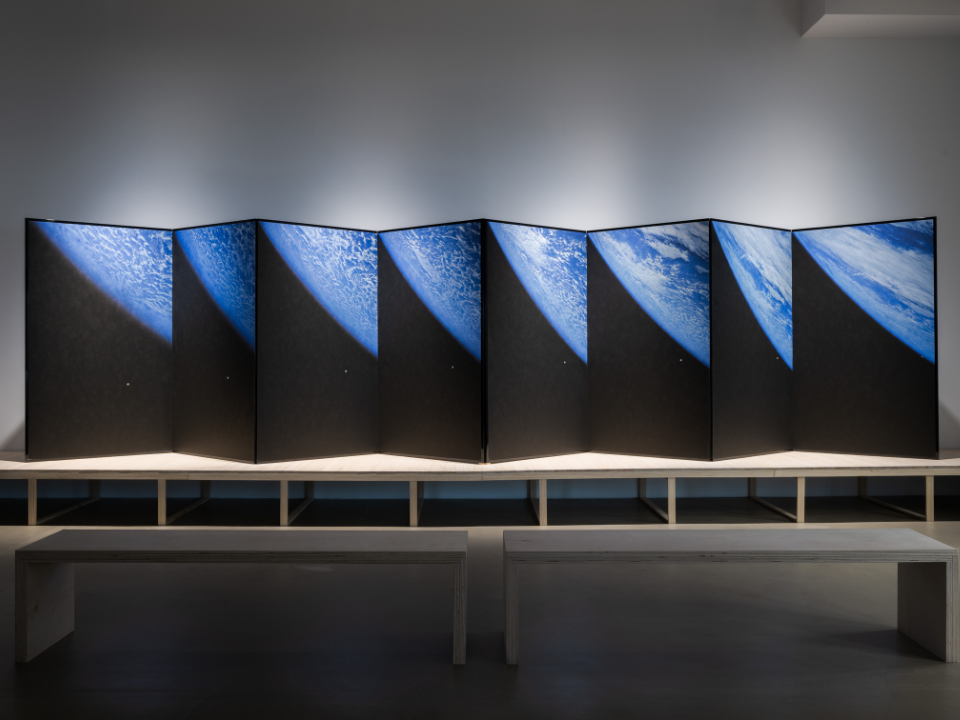
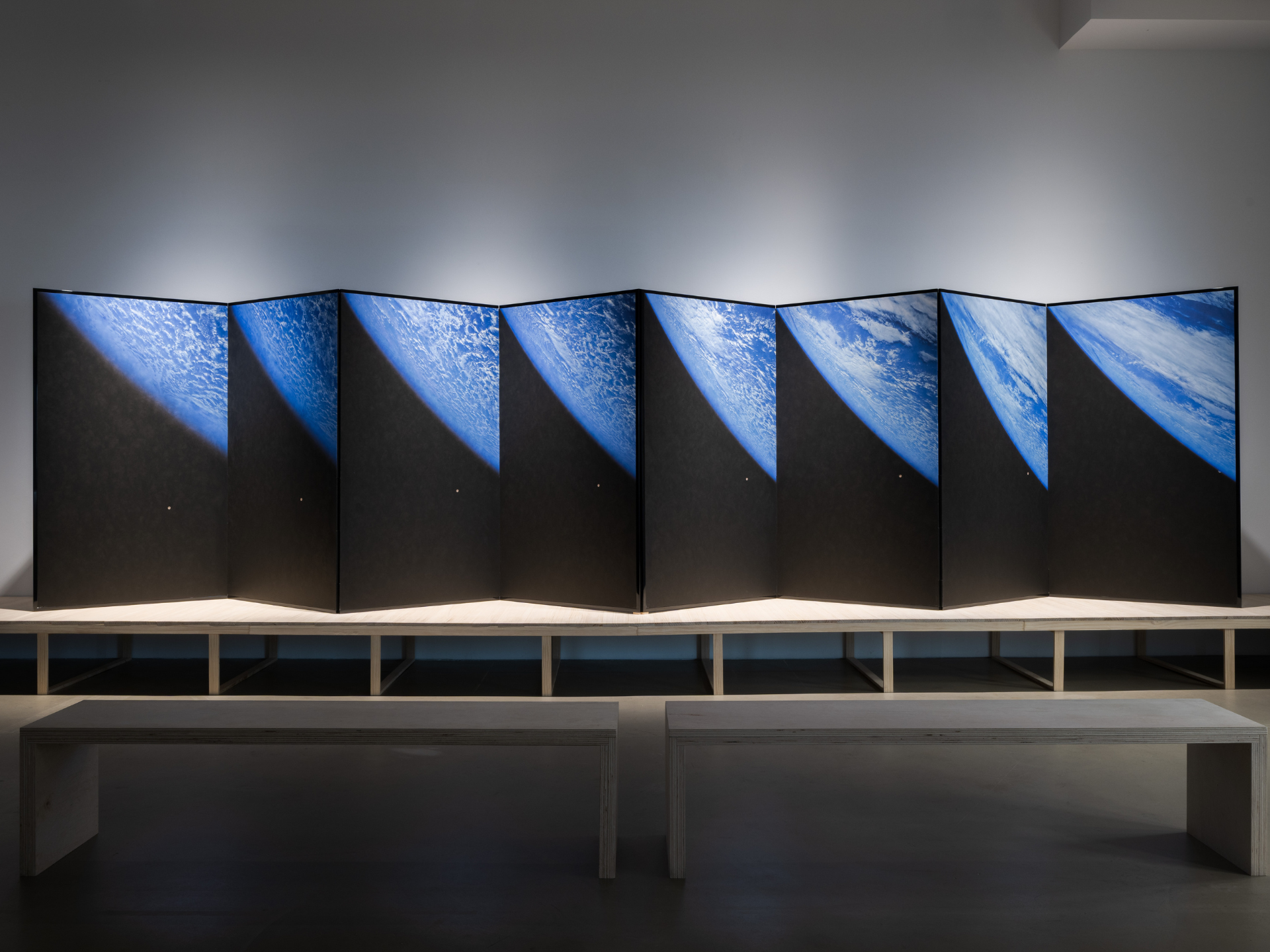
Dimensions: 8 panels, 180 x 109 cm each; 180 x 872 cm fully extended Pigment print on washi paper, mounted to a folding screen;
On view for the very first time, Spacescape takes the form of a folding screen and depicts Earth and the Moon at multiple points in orbit, seen from the omniscient vantage of outer space. The work emerged from a collaboration with Sony, the University of Tokyo, and the Japan Aerospace Exploration Agency (JAXA), who together launched EYE—an ultra-compact satellite with a Sony camera—into orbit in 2023.
If Seascapes locates its horizon on Earth, Spacescape relocates it to the cosmos, extending Sugimoto’s inquiry into perception and scale. The work shifts the viewer from a terrestrial perspective to one shaped by satellite vision, prompting us to reconsider where and how human consciousness is situated. Through Spacescape, Sugimoto moves from observation towards speculation, expanding vision beyond sight alone.
Installation view of Hiroshi Sugimoto, Spacescape (2024), pigment print on washi paper, mounted to a folding screen, 180 x 872 cm fully extended, as part of ‘Hiroshi Sugimoto: Form Is Emptiness’. Image courtesy of Singapore Art Museum.
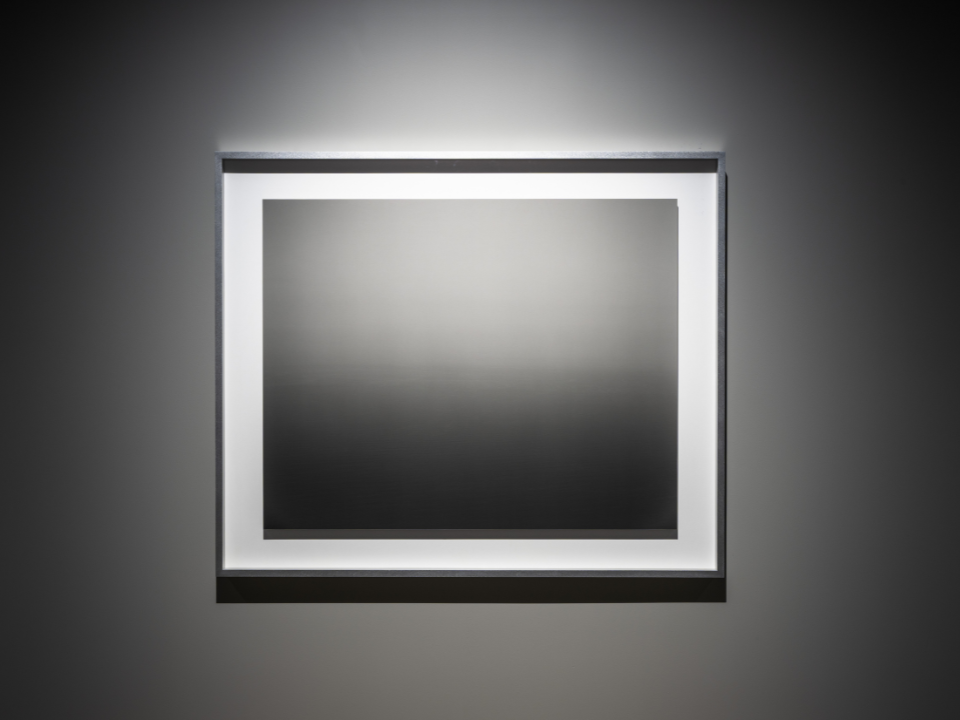
Hiroshi SugimotoTyrrhenian Sea, Scilla
Series: Seascapes; Collection of Singapore Art Museum;
1993
Image size: 119.4 x 149.2 cm; Frame size: 152.4 x 182.2 x 7.6 cm; Gelatine silver print;
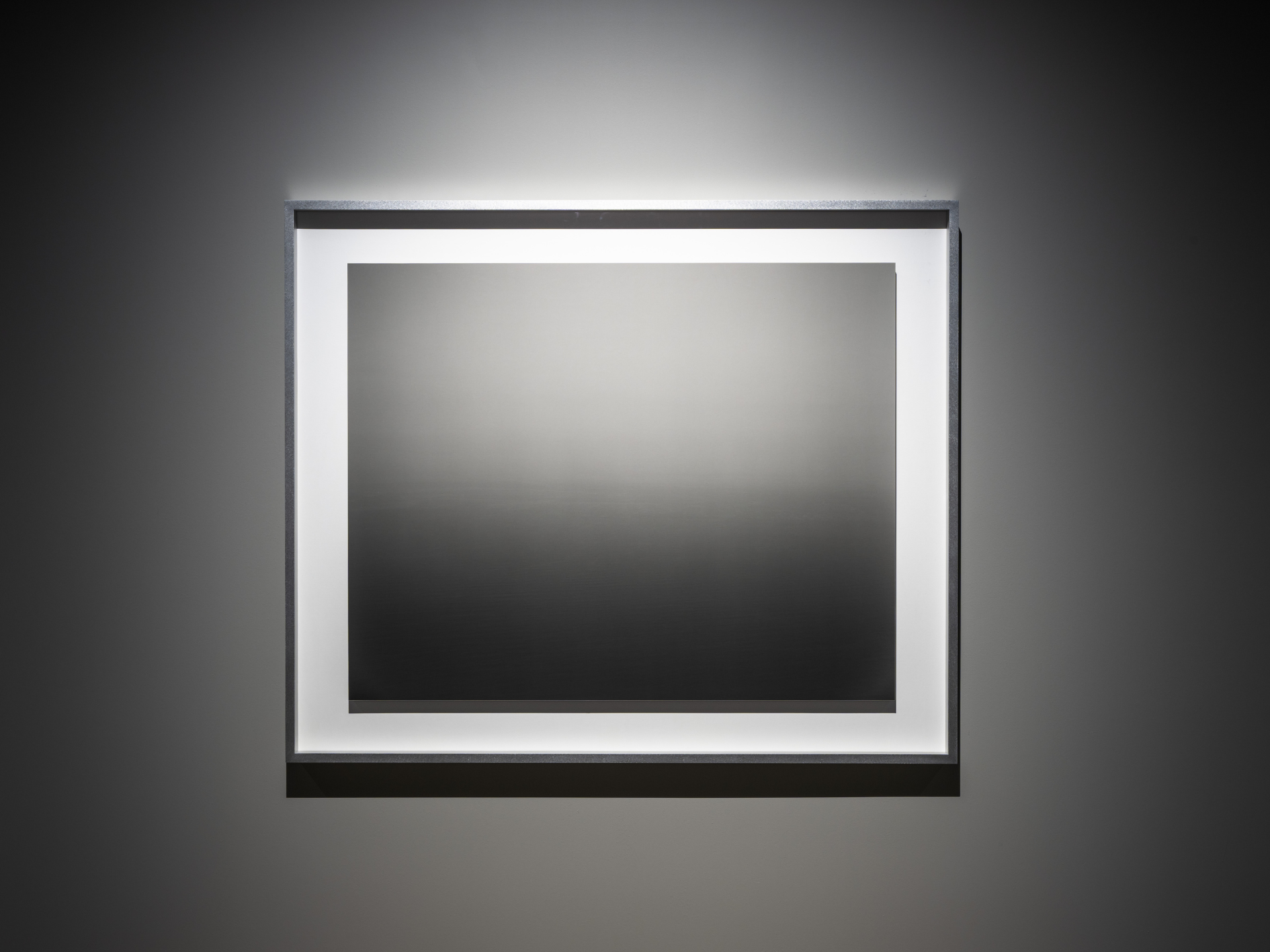
For more than four decades, Sugimoto has photographed his seminal Seascapes across over 250 locations worldwide. Each image follows the same compositional structure: sea and sky meet at a perfectly centred horizon line, with subtle variances in light, weather and atmosphere. By stripping away markers of place, Sugimoto reveals sea and sky as shared conditions across time and geography, revealing the fundamental unity of our planet—and, by extension, the shared history of humankind.
Sugimoto traces his lifelong interest in Seascapes to an early childhood memory of looking out at the ocean. For him, the sea is a reminder of the long span of human history, while the horizon—where water, air and light converge—holds the primordial beginnings of life.
Installation view of Hiroshi Sugimoto, Tyrrhenian Sea, Scilla (1993), gelatine silver print, 119.4 x 149.2 cm, as part of ‘Hiroshi Sugimoto: Form Is Emptiness’. Image courtesy of Singapore Art Museum.
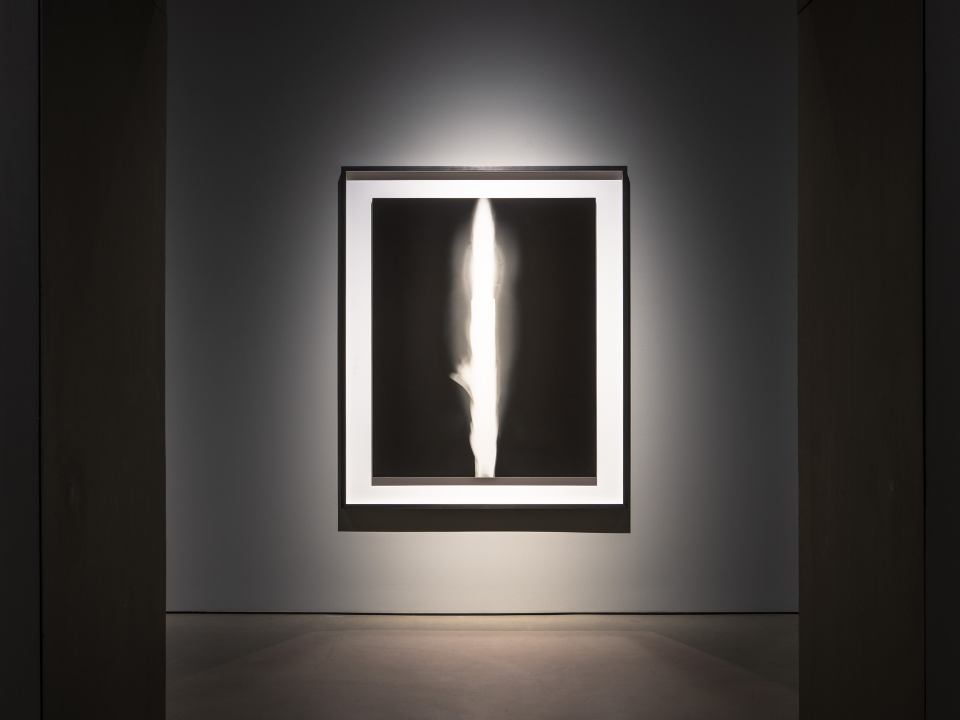
Hiroshi SugimotoSeries: In Praise of Shadows
Collection of the Artist
1998
Image size: 149.2 x 119.4 cm; Frame size: 182.2 x 152.4 x 7.6 cm; Gelatine silver print;
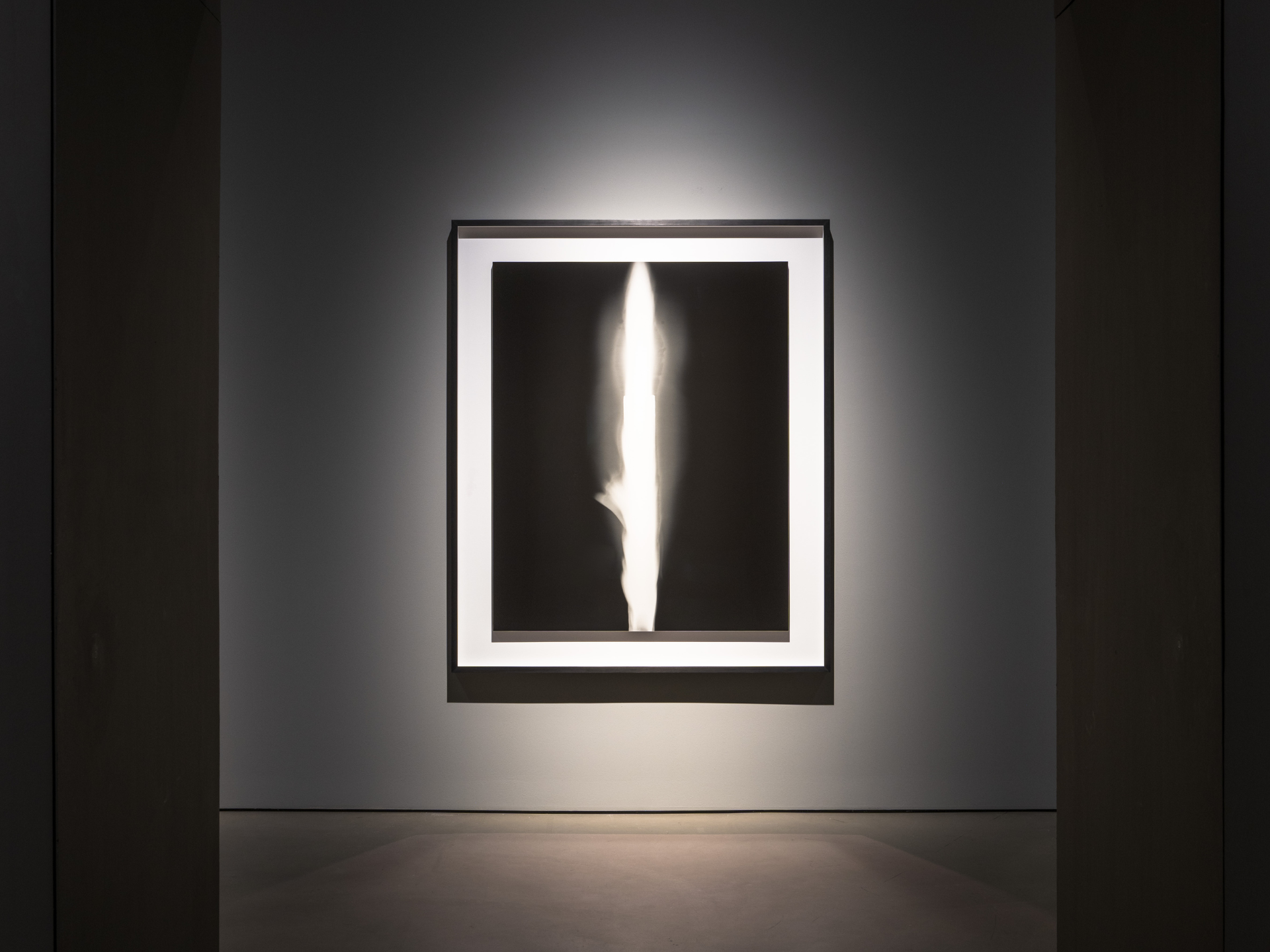
Titled after Jun’ichirō Tanizaki’s 1933 essay on the beauty of shadow and subdued lighting, In Praise of Shadows consists of long-exposure photographs of candles burning through the night. Some flames burnt out quickly; others lasted for hours. Each photograph records the full life of a candle, charting time through the slow accumulation of light.
Like Tanizaki, who valued shadow over the harsh glare of modern lighting, Sugimoto turns to the soft glow of candlelight. The flickering flame recalls one of humanity’s earliest tools—fire—while quietly marking the passage of time and the perpetual cycle of life and death.
Installation view of Hiroshi Sugimoto, In Praise of Shadows 980806 (1998), gelatine silver print, 149.2 x 119.4 cm, as part of ‘Hiroshi Sugimoto: Form Is Emptiness’. Image courtesy of Singapore Art Museum.
Hiroshi SugimotoSeries: Dioramas
Collection of the Artist
1975–2025
Image size: 119.4 x 185.4 cm; Frame size: 152.4 x 218.4 x 7.6 cm; Gelatine silver print;
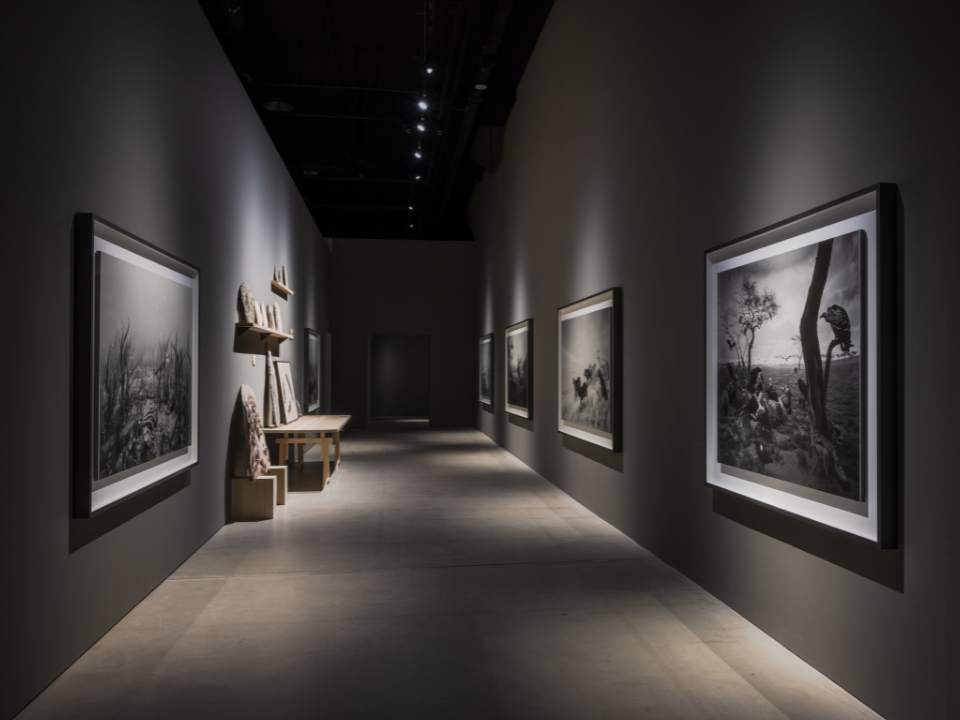
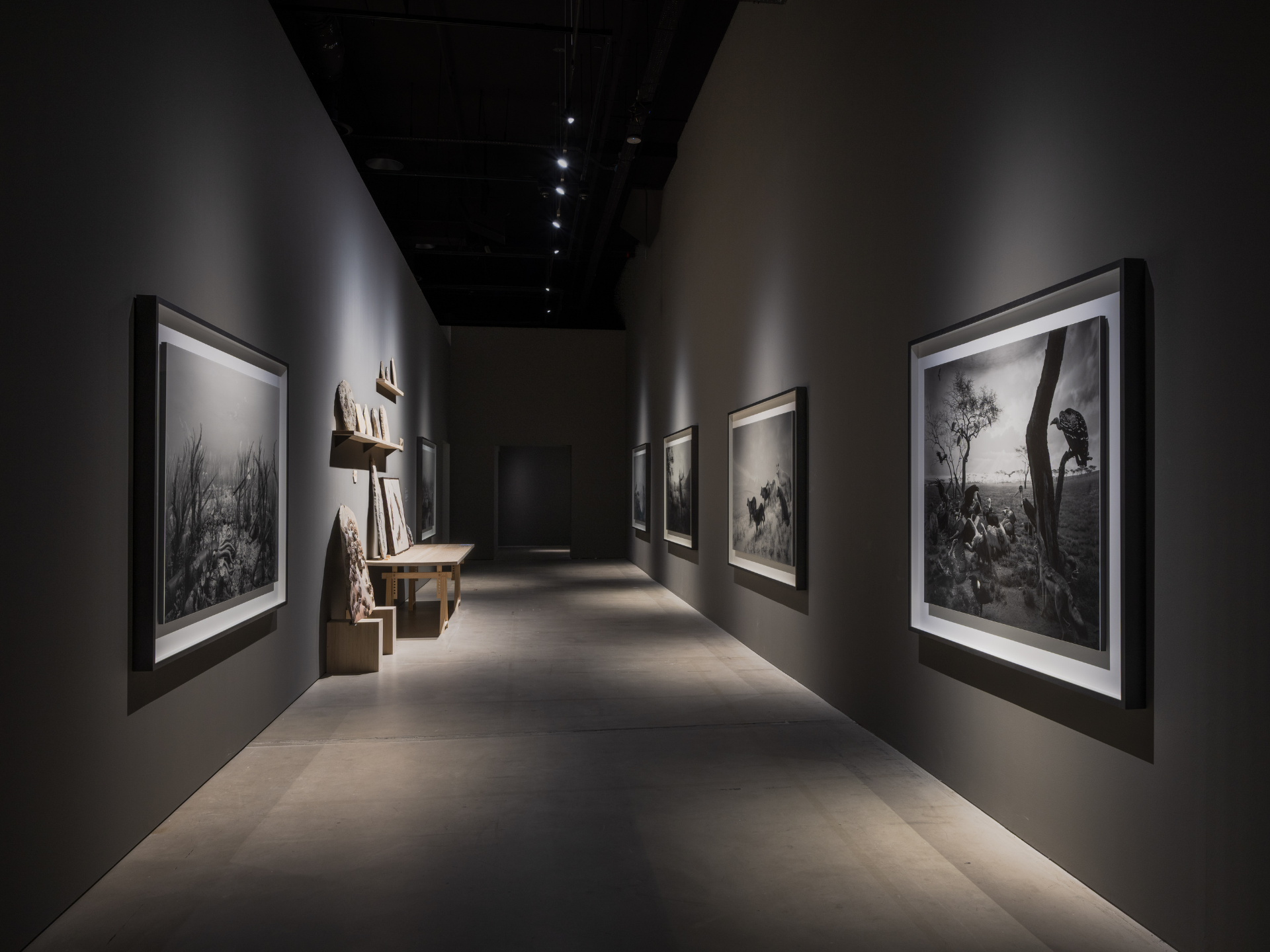
In Dioramas, what at first seem like spectacular wildlife photographs are, in fact, images of natural history displays. When Sugimoto encountered these dioramas at the American Museum of Natural History in New York, he noticed that closing one eye caused perspective to collapse. What had seemed artificial suddenly became uncannily lifelike.
This revelation became the conceptual foundation of the Dioramas series. Through careful framing and controlled lighting, Sugimoto transformed stuffed animals and painted backdrops—imitations of life—into images that feel alive. The works reveal the fragile boundary between appearance and reality, and the camera’s power not only to still life but to instill it.
Installation view of Hiroshi Sugimoto’s Dioramas (1975 – 2025), as part of ‘Hiroshi Sugimoto: Form Is Emptiness’. Image courtesy of Singapore Art Museum.
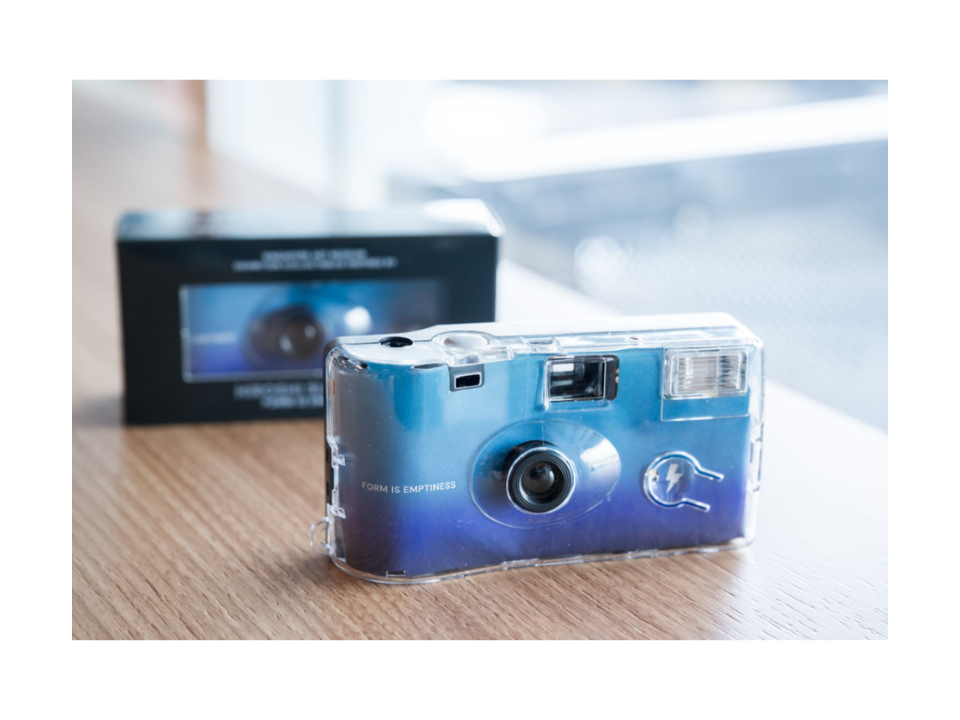
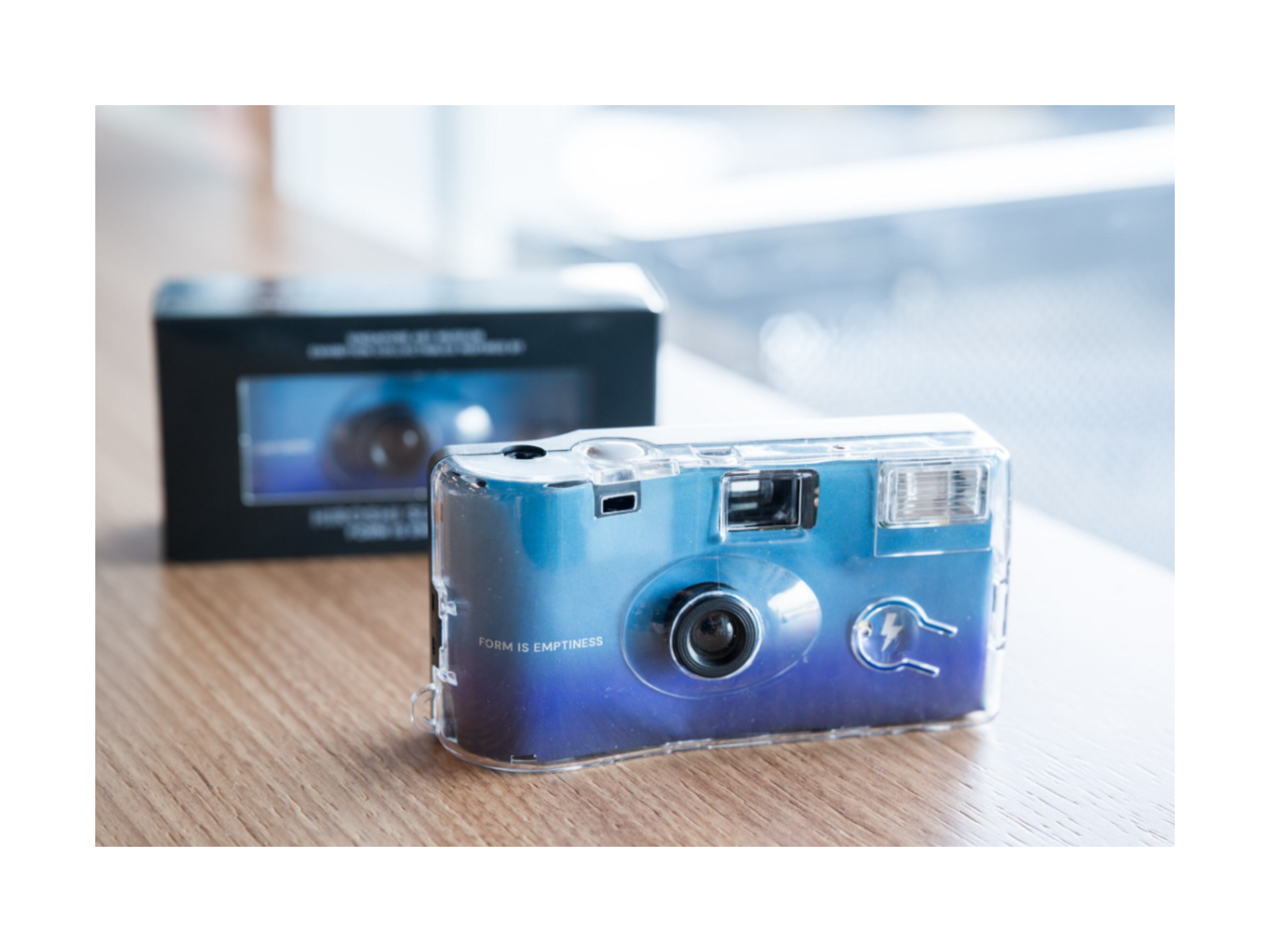
Capture the world with this limited-edition analogue camera, pre-loaded with 27 black-and-white exposures. Inspired by the artist’s meditative exploration of time, light and memory, each frame invites you to slow down and see with intention. A thoughtful keepsake from the exhibition, it offers a tactile and timeless way to create your own monochrome moments.
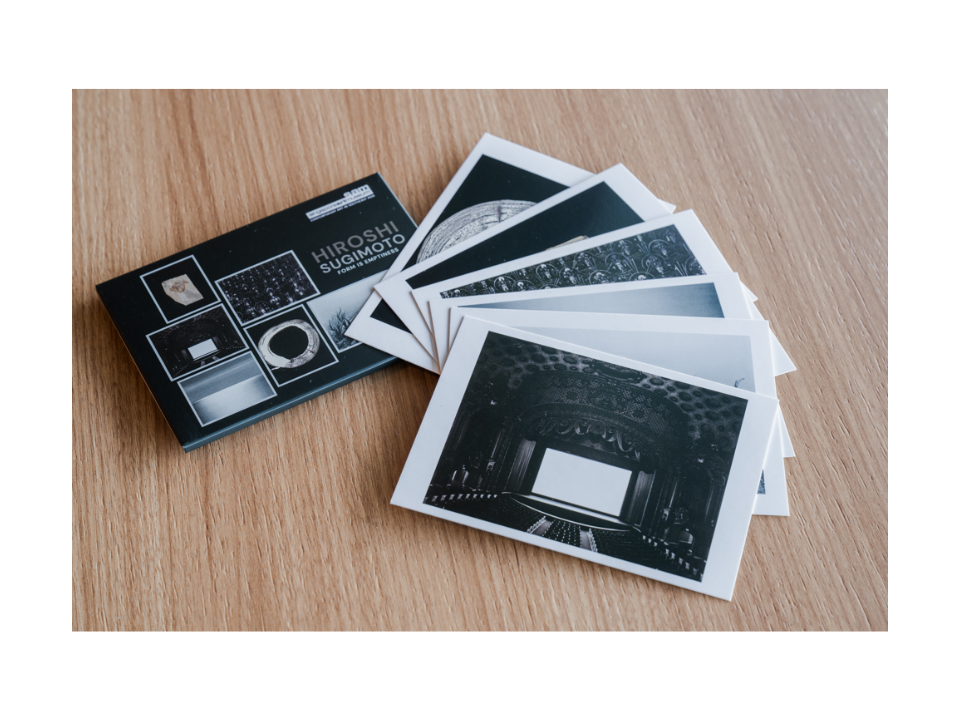
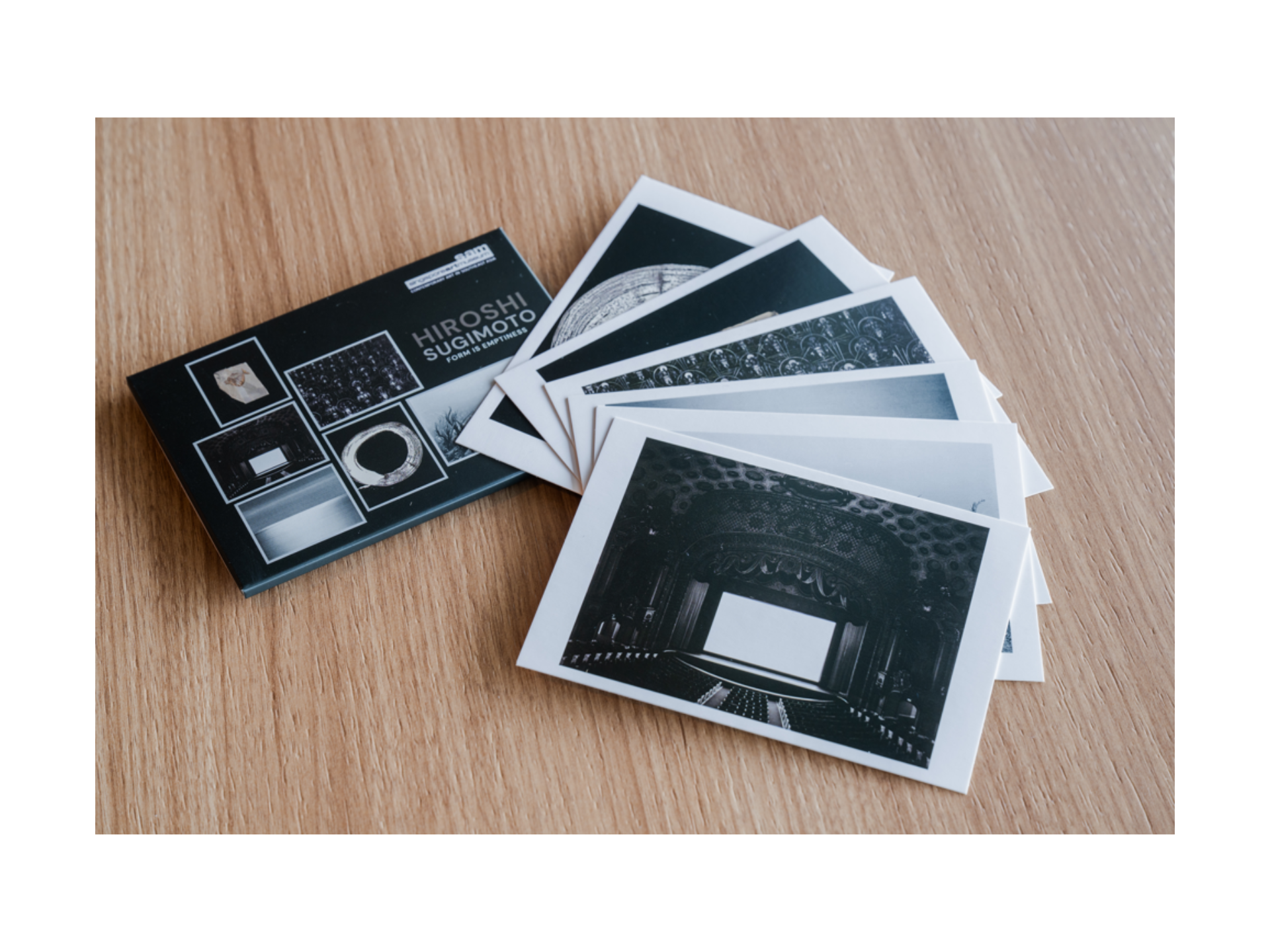
Set of 6 Exhibition Postcards
Price: $18
Size A6
A collectible set of six printed postcards featuring selected works by Hiroshi Sugimoto. Renowned for his meditative black-and-white images, Sugimoto invites viewers to contemplate time, memory and perception. Perfect as a gift or keepsake, this postcard set allows you to bring home a piece of the artist’s timeless vision.
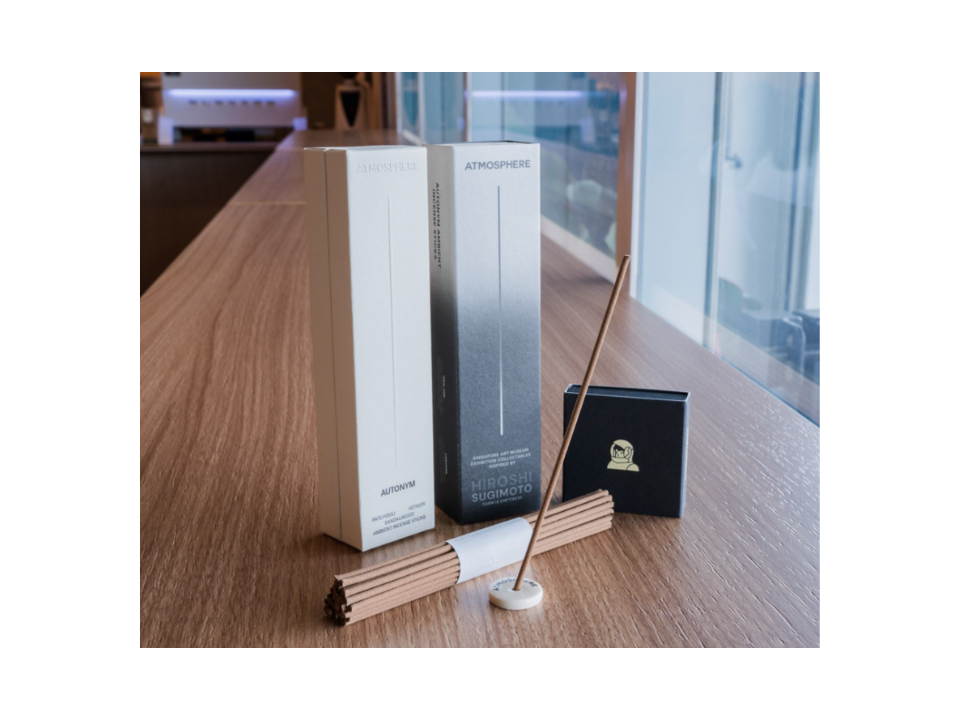
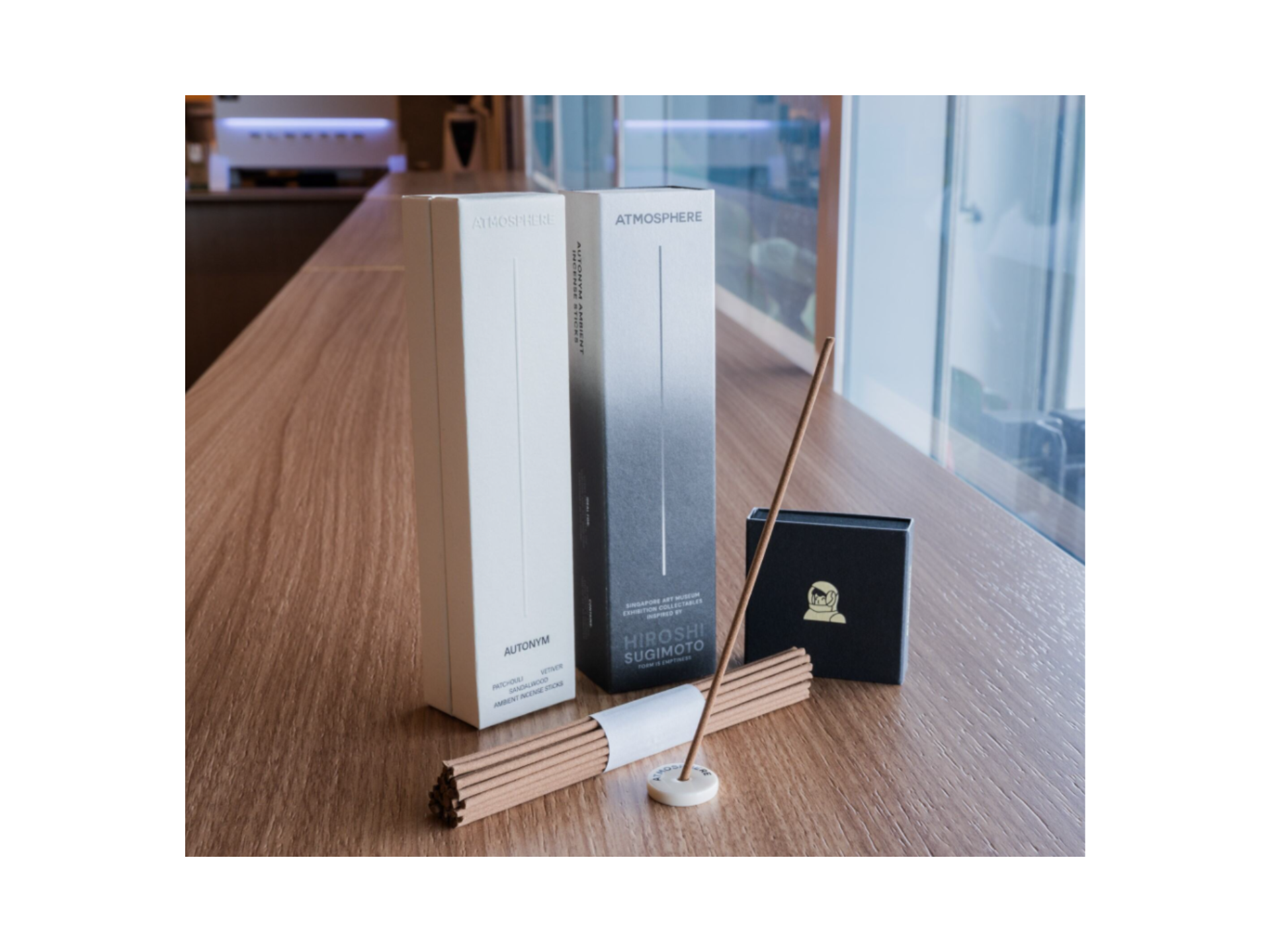
Autonym Ambient Incense Sticks
Price: $40
35 incense sticks
Crafted in collaboration with Atmosphere, this ambient incense evokes the contemplative stillness of Hiroshi Sugimoto’s practice. Warm sandalwood forms the foundation, layered with earthy notes of patchouli and vetiver to create a grounding, meditative scent. A refined keepsake that transforms any space into a moment of quiet reflection.
Fabric Gift Wrap
Price: $42
100% organic cotton
Size: 70cm x 70cm
Crafted from 100% organic cotton and inspired by the Japanese art of furoshiki, this elegant fabric wrap transforms gifting into a thoughtful ritual. Featuring Brush Impression, part of a series of calligraphic works, it is as practical as it is beautiful. Beyond wrapping presents, it can be reused as a scarf, table accent, or keepsake cloth.

 Buy Tickets